Kolla shares what she learnt during her study abroad experience. She writes:
In the summer of 2025, I had the opportunity to travel to Australia and New Zealand with Virginia Tech through a program focused on human interactions and the environment. As a student studying Wildlife Conservation and Animal and Poultry Sciences, I’ve always been intrigued by how human activities impact ecosystems and the lasting effects they create. This program provided some of the most meaningful and exciting experiences of my life while allowing me to study environmental conservation in both New Zealand and Australia.
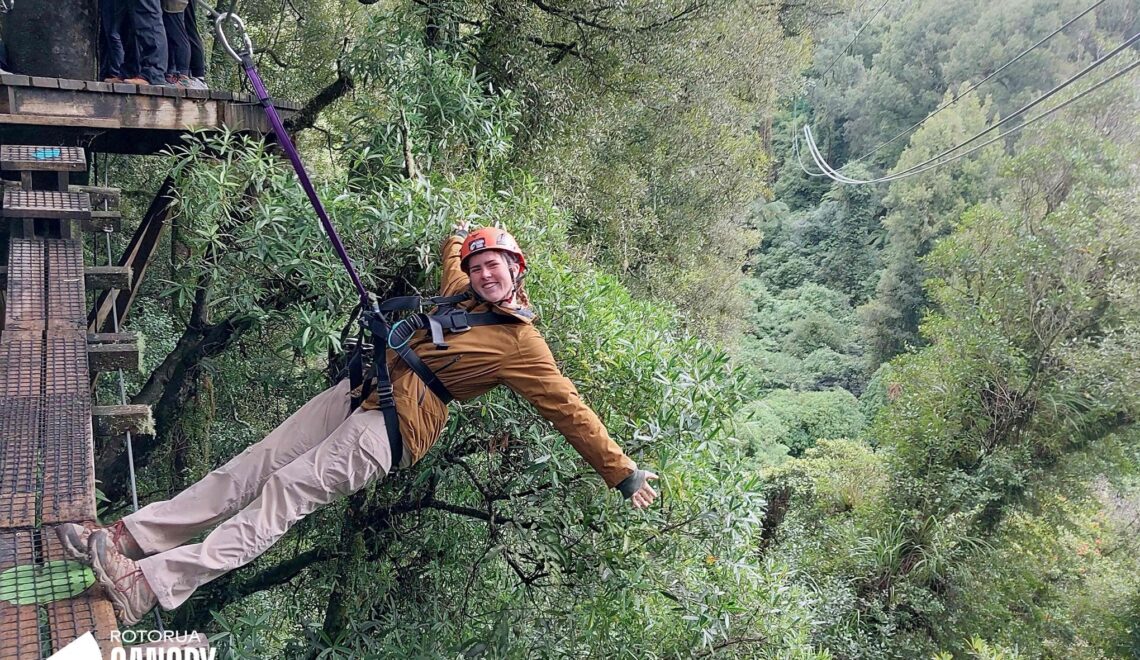
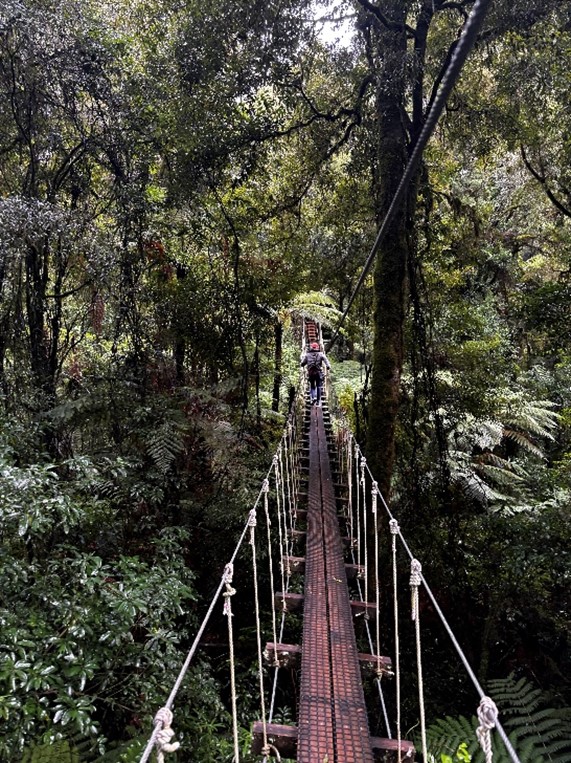
We started off in New Zealand with a fast pace and one of my favorite experiences was ziplining through the Rotorua canopy. Our local guides were helpful in explaining how they’ve struggled with invasive species and their effects on the canopy. They had pictures of what the canopy looked like before they successfully removed invasives such as stoats and possums, and it was truly inspiring seeing the success of what they’re doing first hand. Before they started their removal, the pictures showed a sparse canopy with an obvious browse line from the invasive species. This greatly impaired the native species habitat as our guides told us there was a decline in native bird populations. Since their efforts, we were able to experience a lush canopy full of epiphytes (air plants), ferns, vines, palms, moss, and so much in between. Seeing how lively the canopy was first hand compared to the dreary photos was incredible. The restoration efforts not only revitalized the plant life but also supported the return of the native bird populations
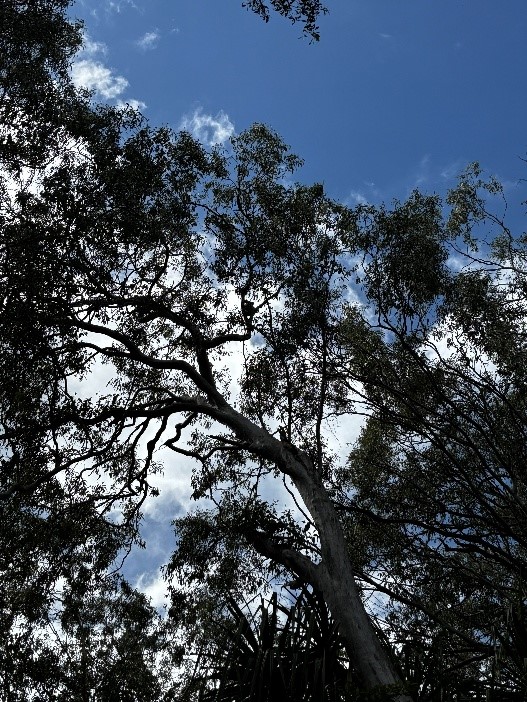
We travelled to Australia next were there was a non-stop journey full of the most amazing quests. Starting off on the most magical island called Magnetic Island, or as the locals like to call it, Maggie Island. Fun fact, this island has the largest koala population in Northern Australia, so we got to partake in a koala population survey! This project has been going on for many years and the biologist that is leading this project showed us how she uses the data to assess habitat and implement protection strategies. In the field we got lucky and saw a wild koala, they’re much harder to spot than one would expect. Turns out certain species of koala prefer specific types of eucalyptus trees, so it’s important to understand each species preferred habitat because koalas help maintain eucalypt forests which are important for other species to use for habitat as well! This survey consisted of sifting through the dirt for their scat (droppings) and we did have a designated scat sniffer in our group. You may be wondering why would you have to sniff koala’s scat? Well, it can be hard to distinguish if they’re fresh or old droppings, so if they smell like eucalyptus still, you can assume they’re relatively fresh and there might be koalas active in the area. This population survey is important to understand koala activity and movement across the landscape and I’m grateful I was able to help collect data for this.
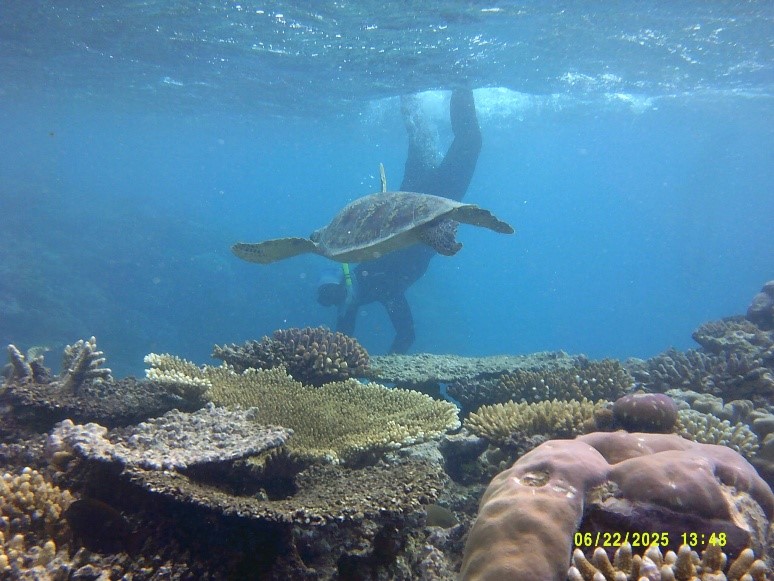
To end the trip, we ventured further north on the Australian east coast and embarked on a life changing journey through the Great Barrier Reef. We had the privilege of learning about the different zoning and policies that went into protecting this world heritage area. After learning about the rules and zoning we got to see how it affected the health and structure of the great barrier reef through citizen science. We worked with the Forever Reef Project to survey the health and general speciation of the coral to help understand how the reef is reacting to climate change. It was life changing to learn about conservation policies and then see them in action, understanding how zoning works on the ocean, and then to see the biodiversity with my own eyes. There truly is a whole other world beneath the surface, and I never realized how magical it was until I was swimming next to a green sea turtle.
This trip reignited my personal passion for marine conservation work and reminded me that meaningful environmental change often begins with passionate individuals. Seeing the innovation and care regarding the environment in Australia and New Zealand made me excited to apply what I’ve learned back in the states and continue my work in conservation. Even though we were only in the north island of New Zealand for 10 days, it opened my eyes to a whole new side of the world, quite literally, and I cannot wait to go back to explore the rest of this magical place. Don’t get me started on Australia, I might have to move there.